
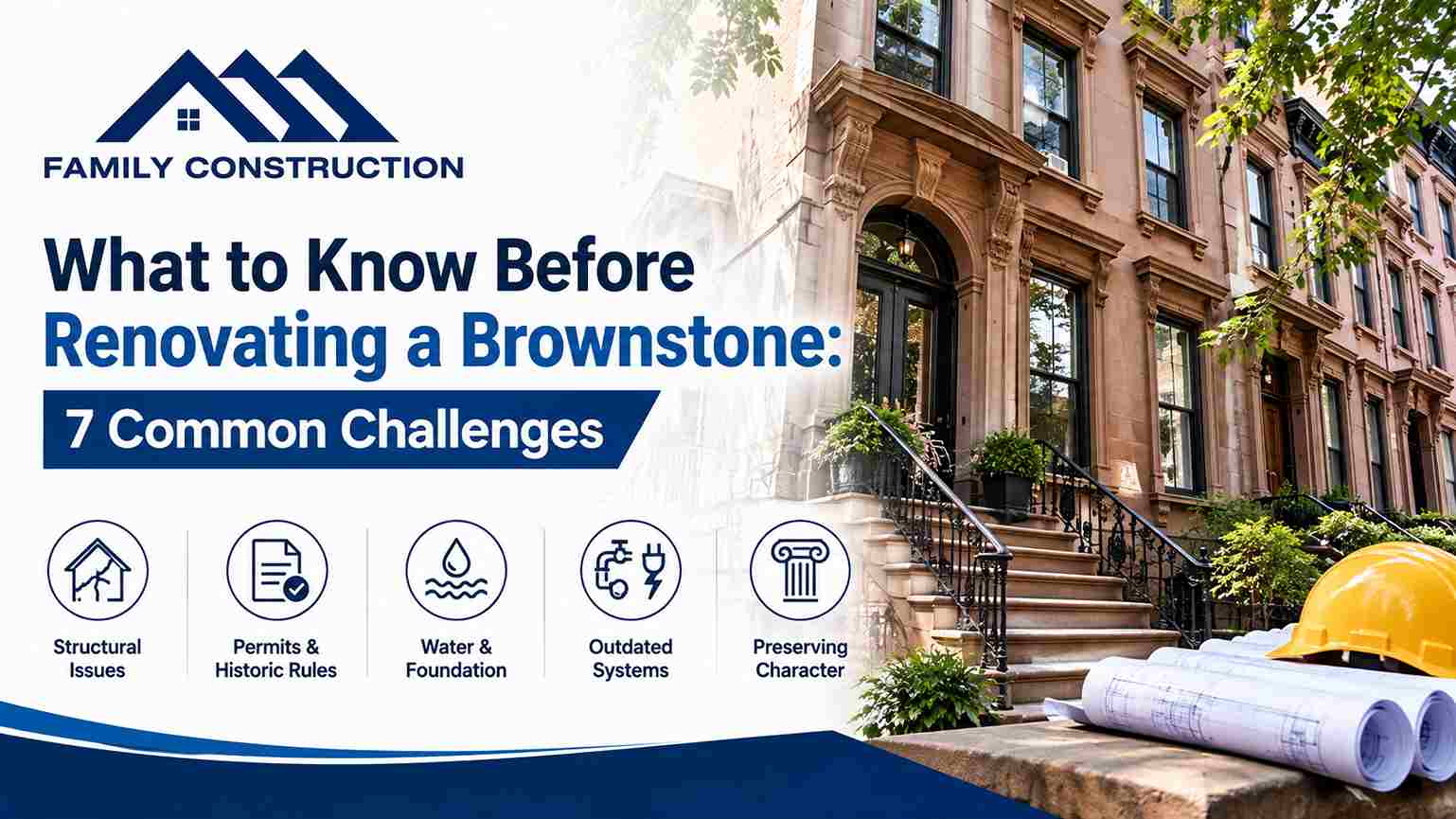
Conducting a brownstone remodeling can be exciting; however, older New York Townhouses have a number of elements that make them considerably different from normal remodeling jobs. At Family Construction NY INC, we understand that any remodeling of brownstones is a success only after understanding the building itself.
The project can be impacted by any of the following factors: aging materials, structural issues, historic considerations, plumbing, electrical systems, and permits. So, when undertaking some interior or exterior renovation, you should be aware of what you could be missing behind the walls and underneath the floors. By planning properly, you can manage the cost of your brownstone, prevent additional delays, and design a home that preserves its original charm while accommodating the demands of the present.
Challenges To Expect Throughout A Brownstone Renovation
1. Hidden Structural Problems
Problems can arise, but won’t necessarily be apparent in a first inspection of an older property. The building’s structure could be affected by previous changes, cracked masonry, weakened joists, beams, or settling.
The following brownstone structural problems must be detected prior to cosmetic treatment. Early treatment of structural issues can avoid costly modifications in the later phase of the project.
2. Brownstone Renovation Costs Can Change
A major difficulty when renovating an old house is making an accurate estimate of the total costs. Conditions may not be apparent until walls, ceilings, floors, or exterior materials are opened.
Brownstone renovation costs can vary from one factor to another, which includes labor, structural repairs, custom materials, plumbing and electrical upgrades, waterproofing, and permit requirements.
It is important to have a contingency plan in a realistic budget, not to assume everything will proceed smoothly.
3. Permits and Historic Requirements
Renting a New York brownstone may require more than just selections of finishes and trades. Some changes may need permits or other approvals as the property’s location, age, and status dictate.
Any changes to the exterior of a property may be subject to special attention if the building is of historic interest or is in a designated district. If any window, masonry, facades, doors, or other obvious changes are made, there may be some specific requirements.
That’s why renovation permits should be considered at the planning phase and not once construction is underway.
4. Foundation & Water Issues
It’s also important to consider moisture, as it can be a problem. For older foundations and basement walls, there may be water intrusion, cracks, or drainage issues.
Over time, a damp basement can lead to mold, damaged finishes, odors, and deterioration of the building materials. If water is entering the foundation through walls or foundation joints, foundation waterproofing may be required.
If you are going to finish a basement or make use of or put living quarters in it, we suggest you start by resolving the water issues. Tackling the symptoms of moisture, rather than the cause, can escalate a minor issue to a major renovation problem.
5. Modernizing Outdated Systems
Plumbing, electrical, heating, and ventilation systems in many brownstones were installed decades ago. These systems may be subjected to much higher loads today than in the early days.
When making renovations, it is a good time to assess these elements and decide if improvements are required. Also, extensive plumbing changes may be needed when moving kitchens and bathrooms.
With good renovation planning, all these renovations are worked out at the same time, thus minimising the risk of needing to re-open completed spaces later in the renovation process.
6. Preserving Historic Character
The beauty of a brownstone can be in the uncommon things that can’t be easily replicated. Original molding, fireplaces, doors, flooring, staircases, trim, and other architectural features can liven up the property.
Sometimes, the point of a successful historic home renovation is not to make it look brand new. Rather, the introduction of new features should be done in harmony with the existing ones as far as it can be done.
With careful restoration, you’ll not only retain the home’s character, but you’ll also gain some extra functionality, comfort, and energy efficiency.
Frequently Asked Questions
What is the typical time frame for a brownstone renovation?
The time frame will be very dependent on the size of the property, condition, scope of work, and approvals needed. A cosmetic change could take a bit of time, or a complete structural and interior overhaul can take much longer.
Are renovation rights required for a NY Brownstone?
Permits are generally needed for many renovation projects, especially when making changes to structural elements, plumbing, electrical, layout changes, or changes to the exterior features. There may be other requirements for historic properties.
What are some ways to keep brownstone renovation costs under control?
Have a thorough scope, hire professionals to assess, prioritize critical repairs, and make a contingency plan for hidden issues. Existing sites may have surprising issues that appear after the site work is completed.
Are basement finishes to be installed before or after the basement is waterproofed?
Yes. If moisture issues are present in the basement, the cause of those problems must be corrected prior to any basement walls, floor, or other materials being installed. Otherwise, the recently renovated area can be damaged by the water.
Should the original features of the brownstone be maintained or replaced?
If the original features are in good condition, then sometimes they can be restored. Retention of architectural features can help to retain the property’s character whilst enabling contemporary improvements to be added around the architectural features.
Renovating a brownstone requires more planning than a typical home improvement project. Hidden structural conditions, changing renovation costs, permit requirements, moisture problems, outdated systems, and original architectural details can all affect the work. Addressing these factors early can help reduce unexpected problems while protecting the character and functionality of the home.
Whether you are planning an interior update, basement improvement, or a larger renovation, a thorough assessment and realistic project plan can make the process more manageable. Family Construction NY INC. provides residential remodeling and construction services with over 25 years of experience.